
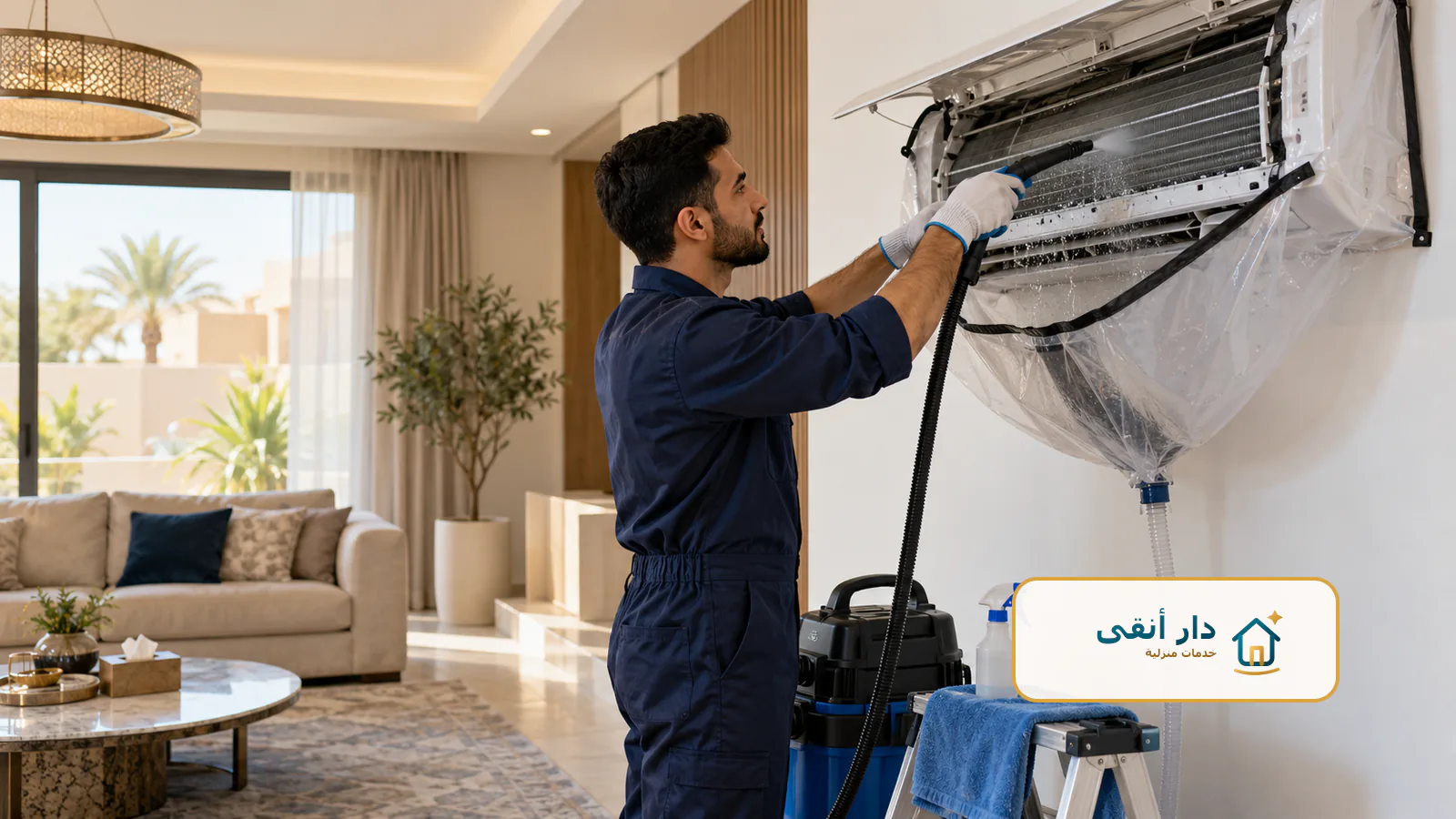
AC care
AC cleaning guide before summer
A dusty AC unit works harder, cools less, and costs more to run — right before the months you need it most.
Why timing matters
Filters and coils collect dust all year, but the effect compounds quietly: airflow drops, the compressor works harder to hit the same temperature, and your bill creeps up. Servicing before summer means the unit starts the hot season at full efficiency instead of catching up.
What a proper cleaning covers
A full service goes beyond wiping the filter — it includes the coils, the drainage line, and a basic check of refrigerant levels and airflow. Skipping any one of these is usually why a "cleaned" unit still underperforms.
Signs you shouldn't ignore
Weak airflow, a musty smell when the unit starts, water pooling near the indoor unit, or a bill that's climbed without a change in usage are all early warnings worth acting on rather than waiting out.
DIY vs professional service
Rinsing or replacing an accessible filter is safe to do yourself every few weeks. Coil cleaning, drainage clearing, and anything involving refrigerant needs a technician — the tools and the risk of damage aren't worth cutting corners on.
A practical plan from observation to decision
Use this guide to build a clear picture before making a decision about AC cleaning. Start with what you can see, smell, or hear, note when the change began, and record whether it is constant or linked to a particular condition. Careful observation is better than jumping to one cause because similar symptoms can come from surface buildup, moisture, difficult access, or a fault requiring a different service.
Simple documentation saves time when you ask for help. Take a wide photo showing the location, then close images of the detail, and record dimensions or quantity, property type, floor, and access. Avoid filters that hide the real color, and photograph a mark before cleaning when it is safe to leave it. This information creates a useful baseline and reduces repeated questions before a visit.
Separate work that is safe to do yourself from work needing tools or experience. Suitable home tasks are visible, easy to reach, and described by the product or equipment instructions. Stop when a part needs dismantling, electricity or height is involved, a chemical is unknown, or a mistake could spread contamination or set a stain. Personal safety and material protection matter more than a quick result.
When comparing providers, do not rely on a broad promise or a price alone. Ask what is included, how the condition is assessed, what counts as additional work, how the surroundings are protected, and which instructions follow the job. A cheaper offer may not include the same scope, while a higher offer does not automatically mean better work; a fair comparison starts with the same clear written scope.
Prepare for the visit by clearing the work route and moving children, pets, and sensitive objects, then share gate, parking, lift, or roof instructions. Do not drain, dismantle, or mix products without case-specific guidance. Tell the provider about every previous attempt or product used because that information can change the testing, cleaning, or treatment method and prevent an avoidable reaction.
After the work, review the agreed scope rather than relying on a quick impression. Ask about observations, use or drying time, ventilation, follow-up, and the signs that justify another contact. Keep the service date, condition photos, and instructions in one note. That small record helps identify seasonal changes and supports a better decision the next time the same area needs attention.
No single schedule suits every property. Frequency depends on use, dust, humidity, material, the age of equipment or surfaces, children and pets, and building conditions. Watch performance and condition rather than ordering work only because a fixed period has passed. Useful preventive care combines regular observation with an early response to real signs, not repetition of a task the property may not need.
If the next step is uncertain, gather facts first and ask a focused question: what is the likely cause, which inspection is needed, and where does the service scope end? Send your city, approximate location, photos, quantity or area, and request preparation and price factors. This turns general online advice into a decision suited to the property without absolute promises or unnecessary work.
An actionable home summary
Turn the information above into a simple weekly plan. Choose a day for a visual check, write down what changed, and complete only safe household care. If the condition improves, continue monitoring and record the result. If the sign remains or returns quickly, do not repeat products or steps without a diagnosis; prepare the photos and notes and request a more focused assessment.
Separate an urgent issue from one that can be planned. Water near electricity, a burning smell, a clear health concern, or unsafe access calls for stopping and contacting the appropriate provider promptly. Routine buildup or slow change can be scheduled after information is collected and scope compared. This distinction protects the property from a rushed decision and gives safety-related work priority.
Set expectations that can be reviewed: which sign should improve, which area will be treated, and how will completion be checked? Some results are visible immediately, while others need drying, operation, or several days of monitoring. Agreeing on a review method reduces misunderstanding, especially when a stain is old, a material has changed, or more than one factor is involved.
Remember the city and building context. Dust, humidity, heat, long operating hours, ventilation, parking, lifts, and roof access all change preparation and timing. A local service page helps when available, but it does not replace the real district or map pin. The clearer the access description, the easier it is to prepare the visit without delay or missing equipment.
The practical conclusion is that good care begins with observation and ends with a useful record. Clean only what the instructions allow, stop at safety and material limits, compare like-for-like scope rather than price alone, and follow aftercare. These steps make a AC cleaning decision reflect the actual property instead of a broad advertisement or a fixed schedule for every home.
Understanding the AC cleaning condition
Useful AC cleaning starts with the right diagnosis. A blocked filter restricts airflow, while weak cooling can also involve the coil, drainage, or a technical fault. We therefore ask for the unit type, quantity, symptoms, and photos of accessible parts when possible. Those details help prepare surface protection, define what can be cleaned during the visit, and separate cleaning from any technical inspection that may be required.
For a split unit, the practical scope commonly focuses on filters, the cover, accessible indoor components, and drainage where relevant. Concealed or central systems require clearer access details and information about vents and service panels. Cleaning the visible part does not resolve every symptom. Persistent odors, water, frost, or abnormal noise can have different causes and should be recorded rather than hidden behind a routine-cleaning request.
Before the visit, move sensitive electronics and furniture away from the work area and mention any ladder, parking, or building-access requirements. The unit receives a basic operating review after cleaning and the room should remain ventilated. Cleaning frequency is not identical for every home: dust exposure, running hours, pets, nearby roads, construction, and the property layout all affect how quickly buildup returns.
Signs worth recording
- Weak airflow from the indoor unit
- Dusty or damp odor at startup
- Visible buildup on filters and louvers
- Water or unusual noise that needs inspection
- Uneven cooling across home units
Home checklist
- Clean the removable filter according to the unit manual
- Record airflow, odor, and noise for each AC
- Look for water or frost without dismantling components
- Photograph the data plate, unit, and access
- Clear the area below the indoor unit
- Arrange cleaning before peak summer demand
Common mistakes to avoid
- Wetting electrical parts or using unsuitable water pressure
- Assuming weak cooling always means low refrigerant
- Ignoring drainage water or recurring odor
- Continuing to run a frozen unit
- Using strong cleaner without material guidance
- Combining several units' symptoms into one description
When is specialist help useful?
Request an assessment for AC cleaning when the sign returns after basic care, covers a large area, involves an unknown material, or requires tools, dismantling, height, or other safety controls. Start with the service page to understand scope and price factors, then use a city page where the service is locally available.
Frequently asked questions
Can I clean the filter myself?
An accessible filter can usually be cleaned according to the manufacturer guide after shutdown; internal components require suitable tools and methods.
Does a higher bill prove the AC is dirty?
Buildup can contribute, but settings, insulation, and faults also matter; compare use and record unit symptoms.
When should I arrange pre-summer cleaning?
Do not wait for the first heatwave; monitor filters and airflow and act when buildup or decline becomes clear.
Will washing solve every AC odor?
Not always. Drainage, dampness, or another component may need separate inspection.
What should I send with a request?
City, unit type, quantity, symptoms, photos, and access instructions.
Book an AC service before the first heatwave and skip the mid-summer breakdown rush.