Signs that you may need this service
- Sudden or gradual cooling loss
- Ice on parts of the system
- Need for pressure measurement
- Suspected leak

Dar Anqa services
Weak cooling does not always mean low refrigerant. The request starts with inspection and leak indicators, then the appropriate action is explained before any refill.
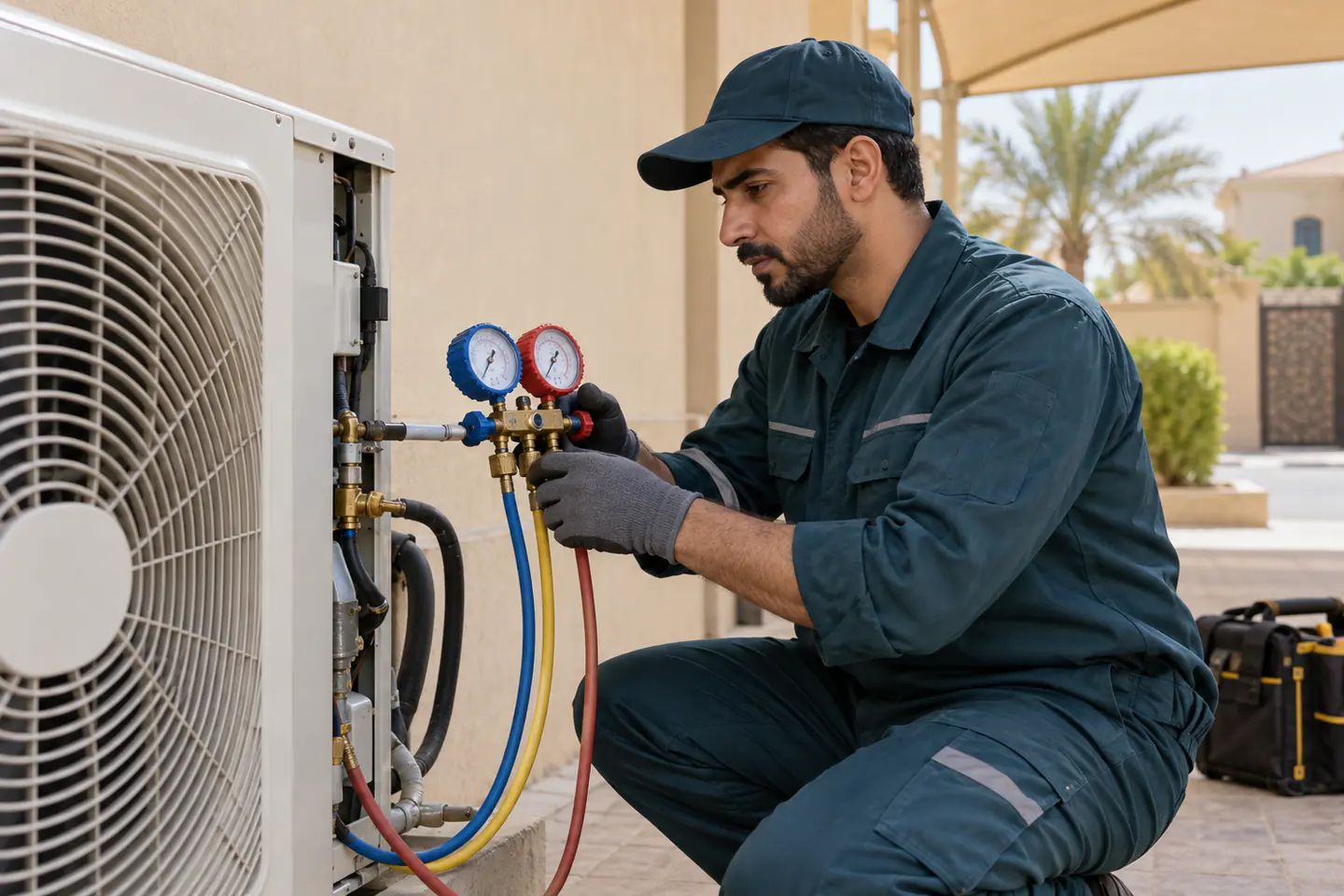
Direct answer
Weak cooling does not always mean low refrigerant. The request starts with inspection and leak indicators, then the appropriate action is explained before any refill. Dar Anqa accepts requests and follow-up 24/7; the visit time is confirmed after the city, scope, and availability are reviewed.
Prepared and reviewed by the Dar Anqa content teamLast updated: Editorial review method
These are starting or indicative offer prices. The final price is confirmed by phone after reviewing the job, quantity or area, and location. Repairs, parts, and extras require your approval.
Refrigerant circulates in a sealed system, so routine loss normally points to an underlying cause. Weak cooling alone is not proof of a low charge; dirty filters, poor airflow, controls, and electrical faults can produce similar symptoms. A useful request records when the problem started, then checks the unit and relevant readings before refill is proposed. This order reduces the risk of paying for material the system does not need.
The compatible refrigerant is normally listed on the unit plate and types must not be mixed. Required quantity is based on system specification and condition, not a guess. If leak indicators appear, the source and repair options should be explained as a separate scope. Adding refrigerant while a leak remains can bring the same problem back and may affect system operation.
Before the visit, send the data-plate photo, unit type, repair or refill history, and any photos of frost or oil traces. Do not open service valves yourself. After inspection, the proposed action and price factors are explained before approval. Parts, leak repairs, and electrical work are not automatically included in a refill request and should be itemized separately when required.
Start a Refrigerant refill request with property type, city, quantity or area, then add clear photos of the condition and access. You do not need to diagnose the cause yourself; describe what you notice, when it began, and any previous attempt. These details make options easier to compare and help separate the core visit from inspection or another service.
Before the appointment, clear the work route, protect sensitive items, and share gate, parking, lift, roof, or building instructions. Do not add a new product, dismantle a component, or move a heavy item without agreement because incorrect preparation can change the condition or cause damage. Mention children, pets, or special safety and ventilation needs in advance.
When scope is provided, review the item or unit count, area, inclusions, exclusions, and price factors. Ask about drying, return-to-use timing, and aftercare. Clear agreement before work reduces on-site changes and gives you a practical basis for reviewing the result against the request instead of relying on a broad expectation.
After Refrigerant refill, keep the visit date, photos, observations, and care instructions. Watch for the same sign returning or a new change, and avoid repeating a random household treatment when the cause is unknown. A simple record improves future decisions and makes follow-up shorter and more accurate, especially in properties with several units or materials.
Compare offers on the same scope: what will be cleaned or inspected, the item count, surface protection, and work priced separately. Price alone cannot explain the difference when two scopes are not equal. Ask for a short written explanation before approval and keep it available during the visit so any new work can be added by a clear decision rather than assumed inclusion.
Choose timing that allows ventilation, drying, or a pause in use when the service requires it. Mention a nearby event or restricted access time, but leave a margin for conditions discovered on site. Early planning is particularly useful in summer and busy seasons and provides time to resolve an access obstacle or prepare the area without rushing.
If the property has several needs, separate the description, photos, and quantity for each service so scopes do not become mixed. Requests can be coordinated when available, but process, price factors, and responsibility remain clear for every part. This helps prioritize work and prevents a technical fault from delaying an independent cleaning task, or the reverse.
Review the care instructions for the actual material or equipment rather than relying on generic advice for another product. Textile, unit, or surface type and its previous condition can change the suitable method. When material is unknown, share a label or hidden-area photo and ask whether a limited test is appropriate; protecting the original item matters more than a quick experiment.
Unit type, symptoms, and when they started.
Measure relevant indicators and look for leak signs.
Clarify whether repair or refill is needed and the expected quantity.
Work begins only after scope and cost are approved.
Share the service, city, and available photos so the scope is clear from the start.
Share the following details for scope and pricing matched to the actual job:
Inspection should come first because low refrigerant may indicate a leak; refill alone may not solve the issue.
It depends on type, quantity, and inspection findings. Cost is explained before work proceeds.
The circuit is generally sealed, so repeated loss deserves investigation rather than repeated top-ups.
It is usually printed on the unit plate and is confirmed before any material is used.
Yes. Type, quantity, readings, and any separate repair affect scope and cost.
Avoid forcing operation and arrange inspection, because continued use can worsen some underlying causes.
Not automatically. Repair is explained as a separate scope after the source is identified.
Include the city, property type, quantity or area, and visible concerns to start with a clear request.