
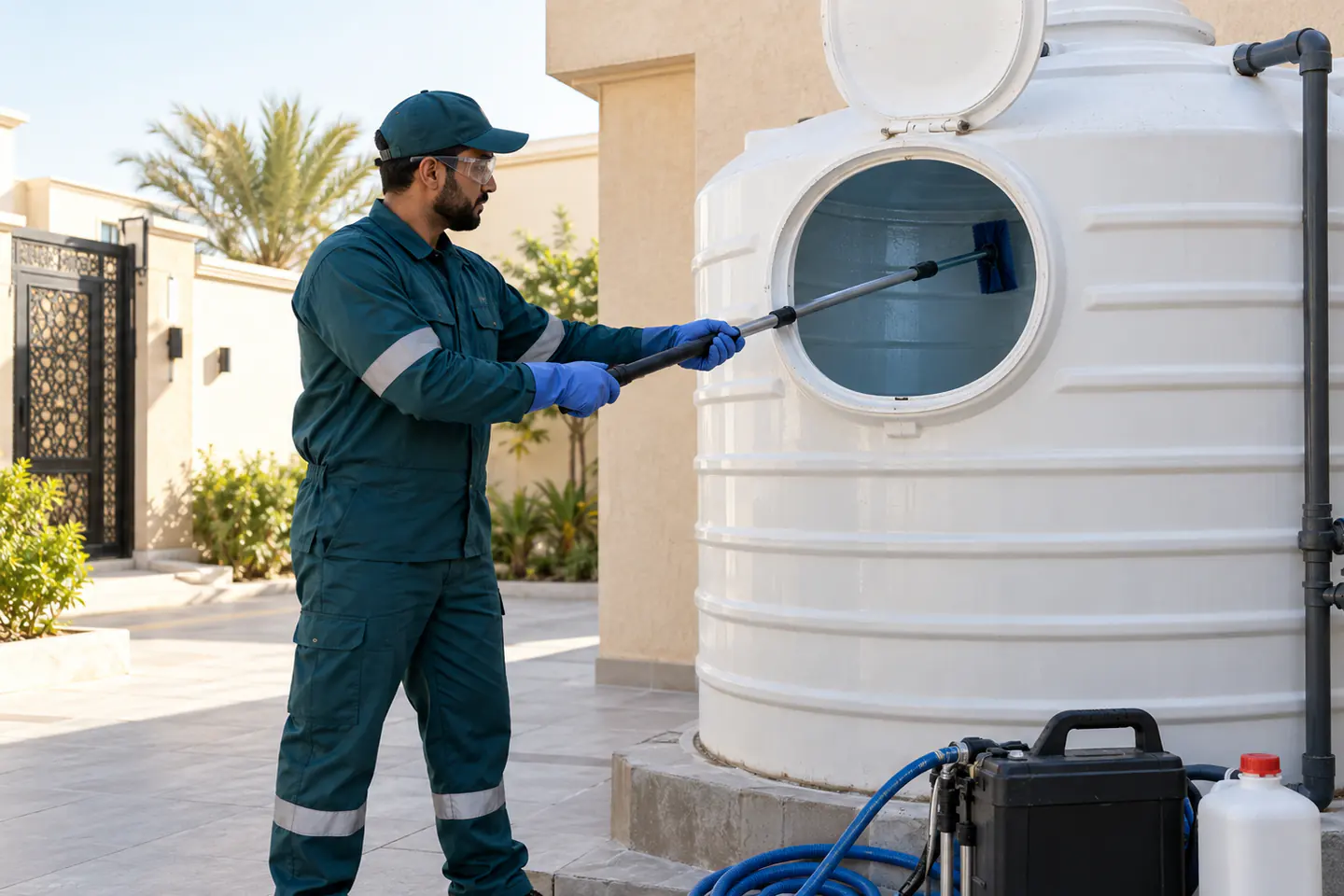
Water Tank Sanitization & Disinfection
What a clean tank doesn't show you is what sanitization fixes
A visually clean tank can still harbor bacteria and biofilm clinging to its walls. Our sanitization service goes beyond scrubbing, treating every interior surface with approved, food-grade disinfectant.
Sanitization is the disinfection step that follows physical cleaning, targeting the bacteria, biofilm, and microorganisms that a scrub alone can't fully remove. It's essential after every full clean, and can also be requested as a standalone service for tanks that need disinfection without a full sediment clean.
Types of Water Tanks We Clean
Common Water Tank Problems
Biofilm clinging to tank walls
A thin bacterial film can form on tank walls even when the water looks clear, resisting simple rinsing.
Bacteria surviving a basic wash
Washing with plain water removes visible dirt but doesn't kill the bacteria that remain on tank surfaces.
Recontamination after refilling
A tank cleaned but not properly disinfected can be recontaminated quickly once water starts moving through it again.
No sanitization certificate for compliance needs
Facilities like schools and hospitals often need documented proof of disinfection, not just a visibly clean tank.
Health Risks of Dirty Water Tanks
Bacterial contamination of drinking water
Undisinfected tank surfaces can continuously reintroduce bacteria into stored water, even after physical cleaning.
Biofilm harboring resistant microorganisms
Biofilm can shelter bacteria from normal water flow, making it a persistent, hard-to-remove contamination source.
Risk to vulnerable populations
Facilities with children, patients, or elderly residents face higher stakes when tank water isn't properly disinfected.
Gradual water quality decline without visible signs
Bacterial contamination doesn't always change water's appearance, so it can go unnoticed without proper disinfection and testing.
Signs Your Tank Needs Cleaning
Our Professional Cleaning Process
Pre-disinfection inspection
We confirm the tank is physically clean and structurally sound before applying any disinfectant.
Approved disinfectant application
Food-grade sanitizing solution is applied to cover all interior surfaces, not just the water itself.
Contact time & coverage check
The disinfectant is left for the required contact time to actually eliminate bacteria, not rinsed away too early.
Full rinse & verification
The tank is thoroughly rinsed to remove disinfectant residue, then checked before being returned to service.
Inspection Before Cleaning
Before disinfecting, we confirm the tank doesn't have underlying issues that sanitization alone can't fix.
Confirming the tank has already been physically cleaned
Checking for structural damage that could undermine disinfection
Verifying inlet and outlet points are also covered in treatment
Sediment Removal Process
Sanitization works more effectively on a sediment-free tank, so remaining debris is cleared before disinfectant is applied.
Confirming no significant sediment remains from prior cleaning
Clearing any residual debris that could shield bacteria from disinfectant
Flagging tanks that need a full clean before sanitization can proceed
Sanitization & Disinfection Process
This is the core of the service — full-surface disinfection using approved, food-safe products.
Even application across walls, floor, lid interior, and fittings
Correct contact time maintained for the product used
Thorough rinse-out before the tank returns to normal use
Equipment & Safe Cleaning Materials Used
Appropriate food-grade disinfectant
A sanitizing solution approved for use in drinking water storage, safe once properly rinsed.
Electrostatic or fogging sprayer
Ensures even disinfectant coverage across every interior surface, including hard-to-reach corners.
Chlorine/residual test kit
Confirms disinfectant levels during application and residue levels before the tank returns to service.
Documentation & certification kit
Produces a dated sanitization record for facilities that require compliance documentation.
Benefits of Professional Water Tank Cleaning
Book Your Service Today
Cleaned the tank, but never disinfected it?
Book a water tank sanitization visit and treat what scrubbing alone can't reach.
Why Dar Anqa
Clear information before requesting service
Clear service scope
Understand what is included and what needs separate assessment or approval.
Service-specific content
Each service explains its steps, price factors, and common questions.
No assumed pricing
A quote is based on the actual condition after details are known.
Before & After Results
Sanitization results aren't always visible, which is exactly why documentation matters as much as the process itself.
Frequently asked questions
Related Services
Suggested Next Services
Explore our other services, or reach out to us directly.
Cleaned the tank, but never disinfected it?
Book a water tank sanitization visit and treat what scrubbing alone can't reach.