
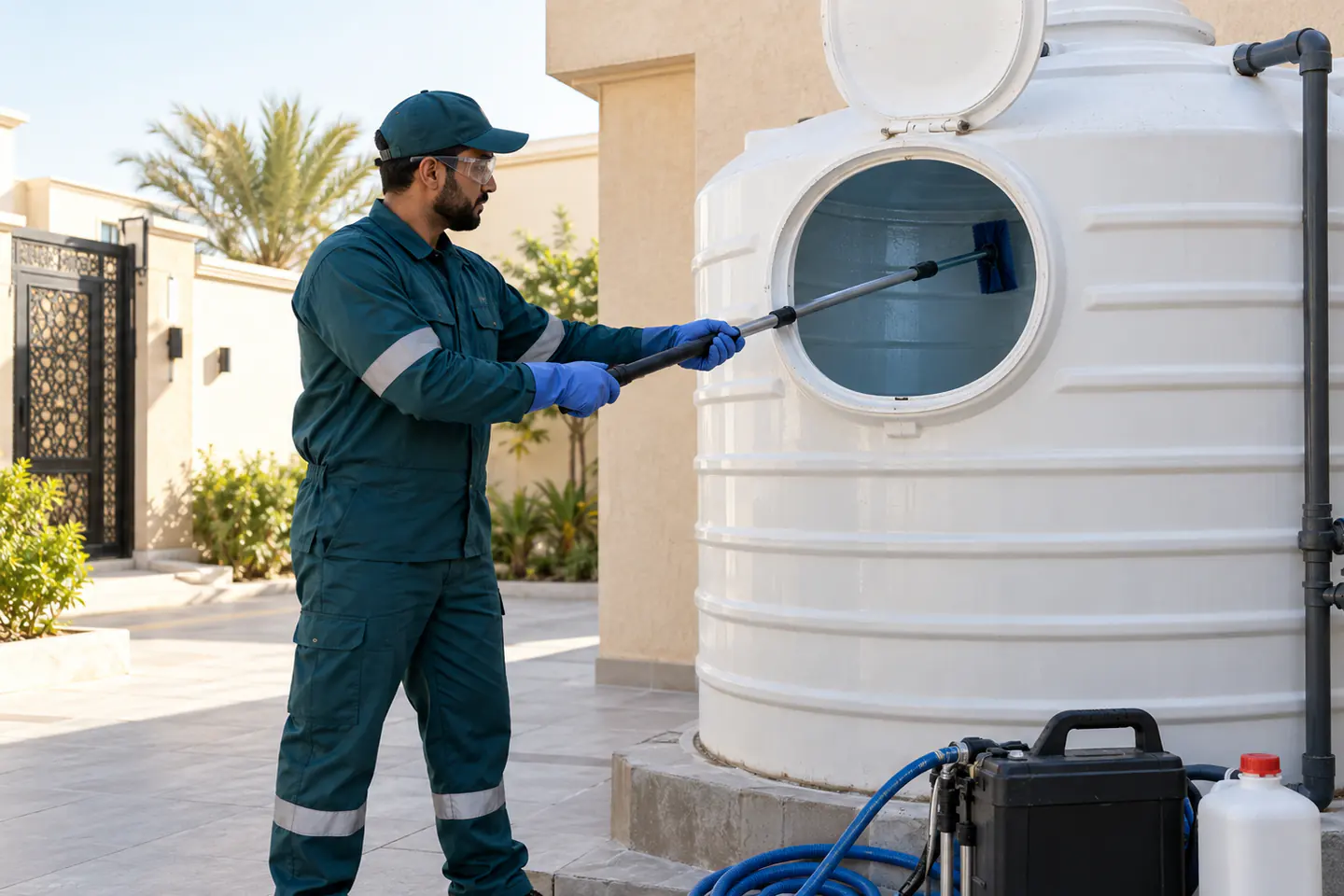
Water Tank Sediment Removal
What settles at the bottom needs more than a rinse
Sand, rust flakes, and organic debris settle at the tank floor over months and years, compacting into a layer that ordinary water flow never disturbs. We extract it directly, not just stir it around.
Every water tank accumulates sediment over time — fine sand carried in through supply lines, rust particles from aging pipework, and organic debris that settles and compacts at the tank floor. Left alone, this layer thickens for years since normal water use never reaches or disturbs it. Sediment removal is a focused service for tanks that need this buildup addressed specifically.
Types of Water Tanks We Clean
Common Water Tank Problems
Compacted sediment layers resistant to rinsing
Sediment that's settled for years can compact into a layer that ordinary draining and rinsing simply won't dislodge.
Reduced effective tank capacity
A thick sediment layer takes up real volume at the tank floor, quietly reducing how much clean water the tank can actually hold.
Sediment disturbance during high-demand periods
Heavy water draw can stir up settled sediment, sending cloudy or gritty water to the taps temporarily.
Pipe and fixture wear from sediment particles
Sediment pulled into the plumbing system can accelerate wear on fixtures, valves, and appliances downstream.
Health Risks of Dirty Water Tanks
Bacterial growth within the sediment layer itself
Compacted organic sediment provides an ideal environment for bacteria to multiply, sheltered from normal water flow.
Sudden contamination spikes during disturbance
When sediment gets stirred up, whatever has been growing within it can spike suddenly in the water reaching taps.
Gradual water quality decline unnoticed for years
Sediment buildup is slow enough that many households don't notice the decline until it becomes significant.
Rust contamination affecting water safety and taste
Rust sediment from aging pipework isn't just a taste issue — depending on volume, it can be a broader water quality concern.
Signs Your Tank Needs Cleaning
Our Professional Cleaning Process
Sediment depth assessment
We assess how thick the sediment layer has become before choosing the right extraction approach.
Full drainage
The tank is drained completely to expose the sediment layer for direct extraction rather than partial rinsing.
Manual & wet-vacuum extraction
Compacted sediment is broken up and extracted directly using manual tools and wet-vacuum equipment, not just flushed.
Floor & corner finishing pass
A final pass targets corners and floor seams where sediment tends to compact most stubbornly.
Inspection Before Cleaning
Before extraction, we assess sediment depth and composition to choose the right removal approach for what's actually there.
Measuring sediment depth across the tank floor
Identifying sediment type — sand, rust, or organic matter
Checking whether sediment has affected pump intake performance
Sediment Removal Process
This is the core of the service — full, direct extraction of what's settled at the bottom, not just a surface rinse.
Manual breaking-up of compacted sediment layers
Wet-vacuum extraction to remove debris without re-suspending it
Thorough final pass on corners and floor seams
Sanitization & Disinfection Process
Once sediment is fully cleared, the tank is disinfected so bacteria that lived within it doesn't simply remain on the surface.
Disinfectant applied only after full sediment extraction
Extra attention to the floor area where sediment was heaviest
Full rinse before the tank is refilled and returned to use
Equipment & Safe Cleaning Materials Used
Wet-vacuum sediment extractor
Removes compacted debris directly from the tank floor rather than letting it re-mix into wash water.
Manual sediment-breaking tools
Used to break up compacted layers that resist simple suction alone.
Submersible drainage pump
Fully drains the tank to expose the sediment layer for direct, thorough extraction.
Sediment depth measurement tools
Assesses how much buildup has accumulated before and after the extraction process.
Benefits of Professional Water Tank Cleaning
Book Your Service Today
Noticed gritty water after the tank sits unused?
Book a water tank sediment removal and clear what years of settling left behind.
Why Dar Anqa
Clear information before requesting service
Clear service scope
Understand what is included and what needs separate assessment or approval.
Service-specific content
Each service explains its steps, price factors, and common questions.
No assumed pricing
A quote is based on the actual condition after details are known.
Before & After Results
The clearest result of sediment removal is a tank floor that's genuinely clean, not just a tank that's been rinsed and refilled.
Frequently asked questions
Related Services
Water Tank Sanitization & Disinfection
Water Tank Inspection Before Disinfection
Underground Water Tank Cleaning
Suggested Next Services
Explore our other services, or reach out to us directly.
Noticed gritty water after the tank sits unused?
Book a water tank sediment removal and clear what years of settling left behind.