
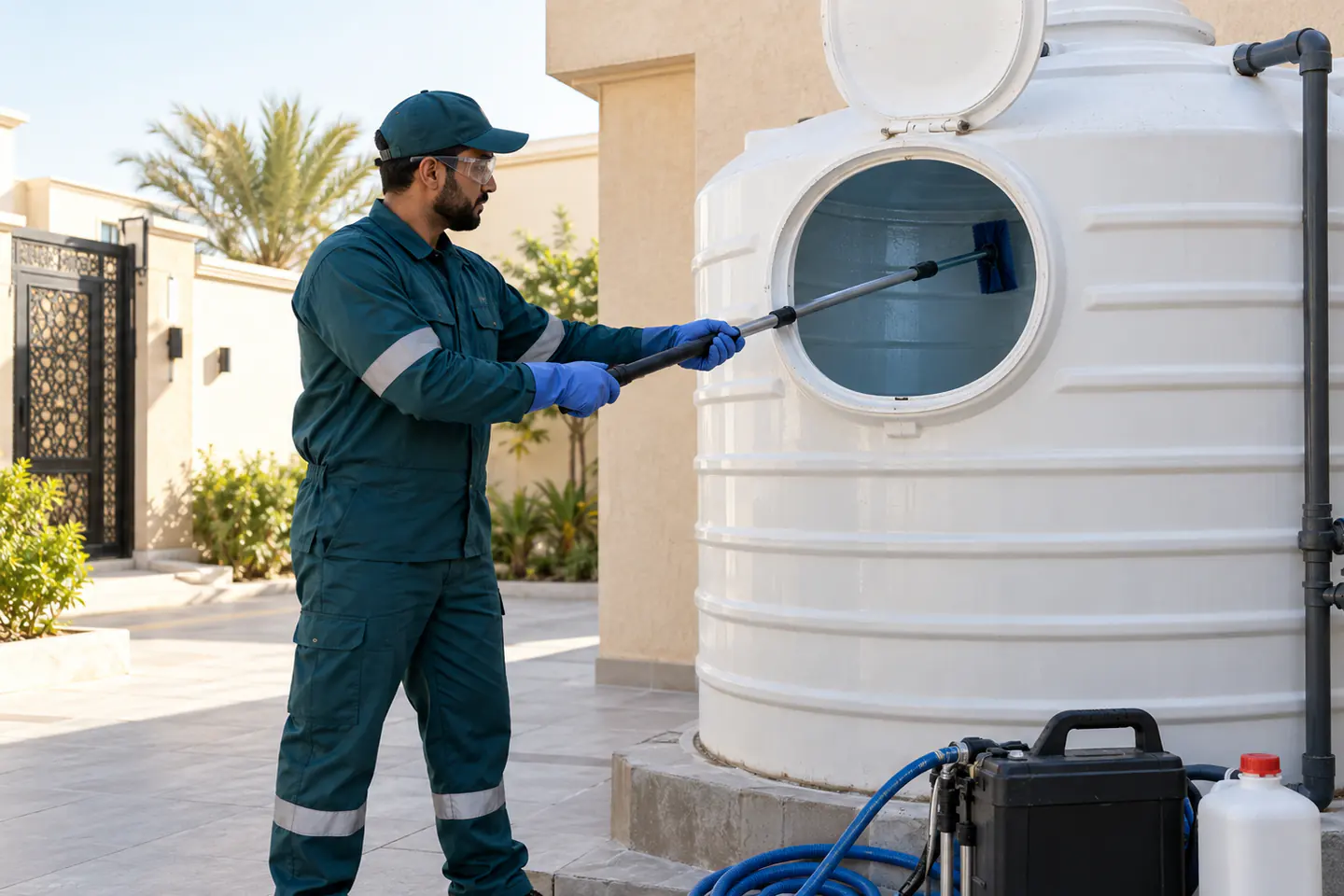
Underground Water Tank Cleaning
Clean water starts below ground — don't skip it
Underground tanks are the most overlooked part of a home's water system, buried out of sight and often uncleaned for years. We drain, scrub, and sanitize them properly, sediment and all.
Underground water tanks (often called 'khazan' tanks) store the bulk of a property's water supply beneath the ground, feeding pumps that push water up to overhead tanks or directly into the home. Because they're buried and rarely opened, sediment, algae, and contamination build up for years without anyone noticing — until water quality or pressure issues finally surface.
Types of Water Tanks We Clean
Common Water Tank Problems
Years of sediment building up unseen
Sand, rust, and organic debris settle at the bottom of underground tanks for years since no one routinely opens them to check.
Cracks letting groundwater or soil in
Underground concrete tanks can develop hairline cracks over time, letting untreated groundwater or soil seep into the stored water.
Poor access making inspection difficult
Manhole covers are often sealed, rusted shut, or buried under landscaping, so the tank goes unchecked simply because it's hard to reach.
Pump intake clogging from settled debris
Sediment stirred up near the pump intake can clog filters and strain the pump that feeds the rest of the property.
Health Risks of Dirty Water Tanks
Bacterial growth in stagnant sediment
Settled organic matter at the tank floor is exactly where bacteria multiply fastest, especially in a warm underground environment.
Contamination from cracks or poor sealing
Groundwater seeping through cracks can introduce contaminants never meant to mix with a clean water supply.
Waterborne illness from unnoticed buildup
Because underground tanks are rarely checked, contamination can persist and reach household taps for a long time before anyone notices.
Pest and insect entry through damaged covers
A damaged or poorly sealed manhole cover can let insects and small pests into the tank, adding another contamination source.
Signs Your Tank Needs Cleaning
Our Professional Cleaning Process
Access & safety setup
We open and secure the manhole access, set up ventilation, and follow confined-space safety protocols before anyone enters.
Full drainage
The tank is fully drained, directing water away from the property and clear of the work area.
Scrub & sediment extraction
Walls, floor, and corners are scrubbed by hand, and settled sediment is extracted rather than just rinsed around.
Sanitize, refill & verify
The tank is sanitized, refilled, and checked for pressure and clarity before the job is considered complete.
Inspection Before Cleaning
Before any cleaning begins, we inspect the tank structure itself — not just what's floating in the water.
Checking for cracks, corrosion, or structural weak points
Assessing manhole cover condition and seal integrity
Confirming pump intake and pipe connections are sound
Sediment Removal Process
Underground tanks accumulate more sediment than any other tank type, simply because they're checked so rarely.
Manual extraction of settled sand, rust, and debris
Wet-vacuum removal to avoid re-suspending sediment in the water
Full floor and corner scrubbing where sediment compacts hardest
Sanitization & Disinfection Process
Once drained and scrubbed, the tank interior is treated to eliminate bacteria before it's refilled.
Approved food-grade disinfectant applied to all interior surfaces
Extended contact time suited to concrete and plastic tank walls
Full rinse before refilling to remove any disinfectant residue
Equipment & Safe Cleaning Materials Used
Confined-space ventilation blower
Maintains safe air quality inside the tank chamber while our technicians work underground.
Submersible drainage pump
Empties the tank quickly and completely, directing water safely away from the work area.
Wet-vacuum sediment extractor
Removes settled sediment directly rather than letting it re-mix with wash water.
Food-grade disinfectant sprayer
Applies approved sanitizing solution evenly across concrete or plastic tank interiors.
Benefits of Professional Water Tank Cleaning
Book Your Service Today
When was your underground tank last opened?
Book an underground water tank cleaning and finally see what's been sitting below.
Why Dar Anqa
Clear information before requesting service
Clear service scope
Understand what is included and what needs separate assessment or approval.
Service-specific content
Each service explains its steps, price factors, and common questions.
No assumed pricing
A quote is based on the actual condition after details are known.
Before & After Results
Underground tanks often show the most dramatic before-and-after difference, simply because they've gone the longest without attention.
Frequently asked questions
Related Services
Suggested Next Services
Explore our other services, or reach out to us directly.
When was your underground tank last opened?
Book an underground water tank cleaning and finally see what's been sitting below.