
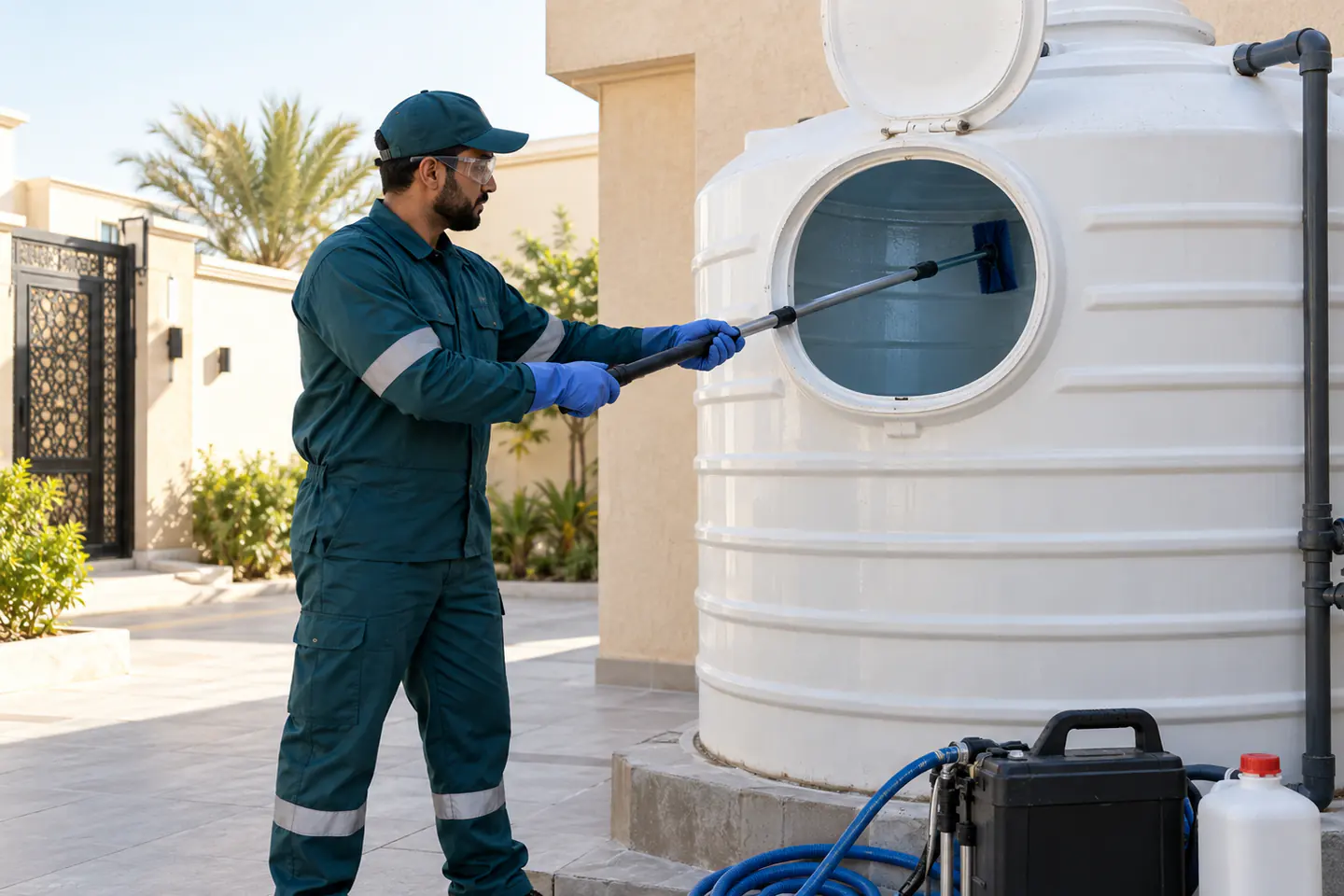
Overhead Water Tank Cleaning
Rooftop tanks face the harshest conditions — clean them properly
Overhead tanks sit exposed to direct sun, blowing dust, and heat all year, conditions that accelerate algae growth and sediment buildup faster than any underground tank. We clean them thoroughly, safely, at height.
Overhead water tanks sit on rooftops or elevated stands, using gravity to feed water to taps below. Constant sun exposure and heat make them a prime environment for algae growth, while dust and sand infiltrate through aging lids and seals — a combination that needs more frequent attention than most homeowners realize.
Types of Water Tanks We Clean
Common Water Tank Problems
Algae growth from constant sun exposure
Sunlight reaching the tank interior through worn or clear panels encourages algae growth far more than in shaded underground tanks.
Dust and sand entering through aging lids
Rooftop tanks face direct sandstorm exposure, and a lid that's cracked or poorly fitted lets grit accumulate inside.
Heat-related material degradation
Constant sun and heat can degrade plastic tank walls over time, sometimes introducing a plastic taste or odor into the water.
Bird or insect access through damaged vents
Damaged vents or lids can let birds and insects reach the tank, adding droppings and debris to the water supply.
Health Risks of Dirty Water Tanks
Algae and bacteria thriving in warm water
The warm, sunlit conditions inside a rooftop tank are close to ideal for both algae and bacterial growth.
Contamination from bird droppings or debris
Rooftop access for birds and insects introduces contamination that's rare in sealed underground tanks.
Degraded plastic affecting water taste and safety
Sun-damaged plastic tanks can leach material into the water over time, affecting both taste and safety.
Heat-accelerated bacterial multiplication
Warmer stored water speeds up bacterial reproduction compared to cooler underground storage.
Signs Your Tank Needs Cleaning
Our Professional Cleaning Process
Rooftop access & safety setup
We access the rooftop safely with proper equipment, especially important for tanks on elevated stands.
Drainage & algae removal
The tank is drained and algae growth on interior walls is scrubbed away by hand, not just rinsed.
Full interior scrub
Walls, lid interior, and floor are scrubbed thoroughly to remove dust, grit, and residue accumulated from rooftop exposure.
Sanitize, refill & lid check
The tank is sanitized, refilled, and the lid seal is checked to reduce future dust and pest entry.
Inspection Before Cleaning
Rooftop exposure means we pay particular attention to the lid, vents, and any sun damage to the tank shell itself.
Checking lid fit and seal against dust and pests
Assessing tank shell for sun-related cracking or wear
Confirming vent condition and any bird or insect access points
Sediment Removal Process
Overhead tanks collect less heavy sediment than underground ones, but more airborne dust and algae debris.
Removal of settled dust and windblown grit from the tank floor
Scraping of algae buildup along sun-exposed walls
Clearing of debris around the outlet to protect downstream taps
Sanitization & Disinfection Process
Sanitization targets both the surface algae and the bacteria that thrive in the tank's warm, sunlit conditions.
Approved disinfectant applied after algae and grit are fully removed
Extra attention to lid interior and vent areas prone to recontamination
Thorough rinse to clear residue before the tank is refilled
Equipment & Safe Cleaning Materials Used
Rooftop safety access gear
Ensures technicians can work securely on rooftops and elevated tank stands.
Algae scrubbing brushes
Non-abrasive brushes designed to remove algae from tank walls without damaging plastic or fiberglass surfaces.
Portable drainage pump
Empties the elevated tank efficiently despite rooftop access constraints.
UV-stable disinfectant solution
A sanitizing agent suited to tanks that see regular sun exposure.
Benefits of Professional Water Tank Cleaning
Book Your Service Today
Tank on the roof looking a little green?
Book an overhead tank cleaning and get clear, fresh-tasting water again.
Why Dar Anqa
Clear information before requesting service
Clear service scope
Understand what is included and what needs separate assessment or approval.
Service-specific content
Each service explains its steps, price factors, and common questions.
No assumed pricing
A quote is based on the actual condition after details are known.
Before & After Results
The clearest sign of a job well done on an overhead tank is water that runs clear with no green tint or musty taste.
Frequently asked questions
Related Services
Underground Water Tank Cleaning
Water Tank Sanitization & Disinfection
Periodic Water Tank Maintenance
Suggested Next Services
Explore our other services, or reach out to us directly.
Tank on the roof looking a little green?
Book an overhead tank cleaning and get clear, fresh-tasting water again.