
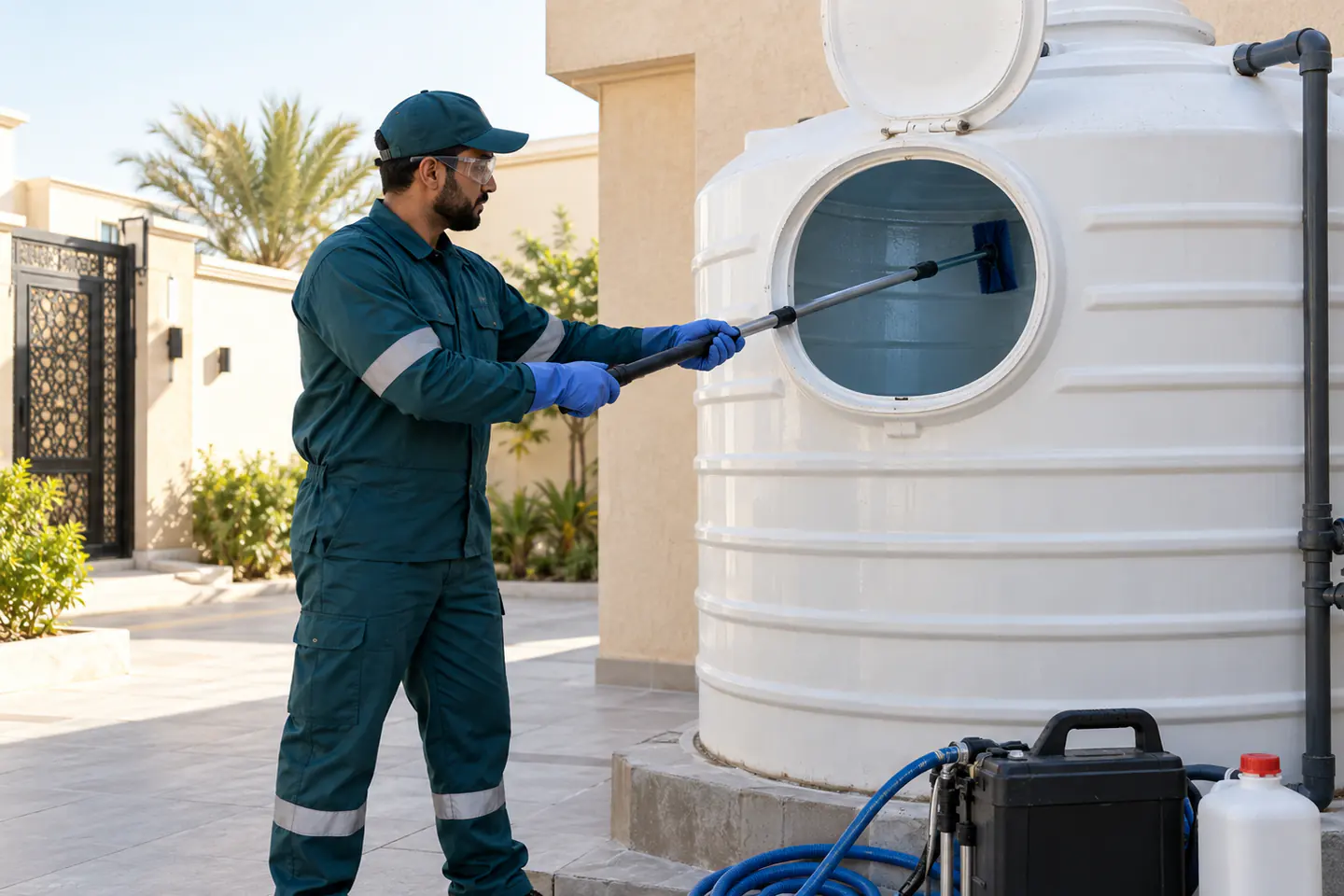
Stainless Steel Water Tank Cleaning
Protect the finish while getting it properly clean
Stainless steel tanks are prized for durability and corrosion resistance, common in premium villas and commercial installations. We clean them with methods that protect the steel finish while still fully removing buildup.
Stainless steel tanks are a premium choice for their corrosion resistance and long service life, often used in higher-end villas, hotels, and commercial buildings. While steel resists rust better than other materials, welded seams and fittings can still develop wear, and mineral deposits from hard water still need proper removal without damaging the finish.
Types of Water Tanks We Clean
Common Water Tank Problems
Mineral deposits from hard water
Even corrosion-resistant steel develops mineral scale from hard water over time, requiring proper removal technique.
Weld seam wear over years of use
Welded joints in steel tank construction can develop wear or minor corrosion at the seam even when the main panels remain sound.
Surface scratching from improper tools
Using the wrong abrasive tools on stainless steel can scratch the protective finish, ironically making it more prone to future corrosion.
Sediment accumulation despite the smooth surface
Even steel's smoother surface still allows sediment to settle at the tank floor over time without regular cleaning.
Health Risks of Dirty Water Tanks
Bacteria in scratched or worn surfaces
Scratches from improper cleaning tools create the same bacteria-trapping effect on steel as on plastic or fiberglass.
Contamination through weld seam deterioration
If weld seams develop enough wear, they can become a point of contamination entry that's easy to miss without close inspection.
Mineral buildup masking underlying issues
Heavy mineral scale can sometimes hide early corrosion or seam wear until a proper cleaning exposes the surface underneath.
Compounding sediment risk in infrequently checked tanks
Sediment sitting undisturbed for long periods still supports bacterial growth, regardless of the tank material.
Signs Your Tank Needs Cleaning
Our Professional Cleaning Process
Weld seam & surface inspection
We check weld seams and overall surface condition before selecting cleaning tools appropriate for steel.
Non-scratching mineral removal
Mineral deposits are removed using steel-safe tools that won't scratch or dull the protective finish.
Sediment extraction
Settled debris is fully removed from the tank floor, even where the smoother steel surface makes buildup less obvious.
Sanitization & finish check
The tank is sanitized and the steel finish is checked to confirm no damage occurred during the cleaning process.
Inspection Before Cleaning
Steel tank inspection pays particular attention to weld seams, the most common point of wear in this tank type.
Checking weld seams for corrosion or developing wear
Assessing overall surface finish for existing scratches
Confirming fittings and connections remain properly sealed
Sediment Removal Process
Sediment is fully cleared even though steel's smoother surface can make buildup less visually obvious than in concrete tanks.
Full extraction from the tank floor despite the smoother surface
Attention to weld seam areas where debris can accumulate
Removal without introducing any scratching to the steel surface
Sanitization & Disinfection Process
Disinfection uses products confirmed compatible with stainless steel to avoid any unintended surface reaction.
Steel-compatible disinfectant selected to protect the finish
Even coverage across walls, floor, and weld seam areas
Full rinse to prevent mineral or disinfectant residue
Equipment & Safe Cleaning Materials Used
Non-scratching steel cleaning pads
Selected specifically to remove buildup without scratching or dulling the stainless steel finish.
Weld seam inspection tools
Used to check for corrosion or wear specifically at welded joints.
Steel-safe mineral deposit remover
Clears hard water scale without the abrasiveness that could damage steel surfaces.
Steel-compatible disinfectant
A sanitizing solution confirmed safe for use on stainless steel tank interiors.
Benefits of Professional Water Tank Cleaning
Book Your Service Today
Want your steel tank cleaned without risking the finish?
Book a stainless steel water tank cleaning using methods built for the material.
Why Dar Anqa
Clear information before requesting service
Clear service scope
Understand what is included and what needs separate assessment or approval.
Service-specific content
Each service explains its steps, price factors, and common questions.
No assumed pricing
A quote is based on the actual condition after details are known.
Before & After Results
A properly cleaned steel tank shows a finish free of new scratches, weld seams confirmed sound, and mineral buildup fully cleared.
Frequently asked questions
Related Services
Suggested Next Services
Explore our other services, or reach out to us directly.
Want your steel tank cleaned without risking the finish?
Book a stainless steel water tank cleaning using methods built for the material.