
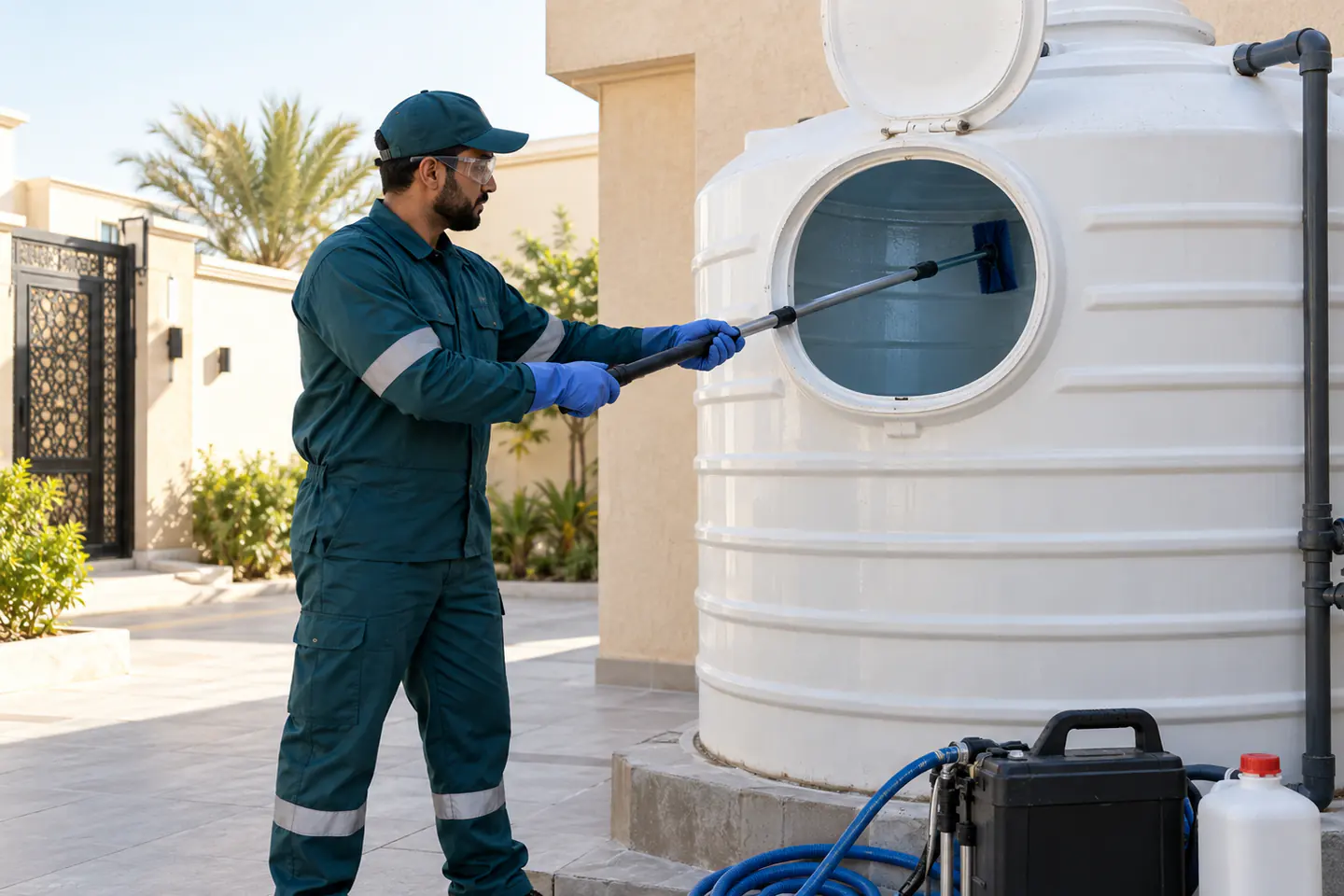
Plastic Water Tank Cleaning
Thorough cleaning without scratching the tank
Plastic tanks are lightweight and common across Saudi homes, but they scratch more easily than concrete or steel — and scratches trap bacteria. We clean them with tools matched to the material.
Plastic tanks, typically made of polyethylene (PE) or polypropylene (PP), are the most common tank type in Saudi residential use thanks to their lower cost and easier installation. Their surface is more prone to scratching than concrete or steel, which means cleaning technique matters as much as thoroughness — abrasive tools can create micro-scratches where bacteria hide.
Types of Water Tanks We Clean
Common Water Tank Problems
Scratches from improper cleaning tools
Abrasive brushes or scrapers not suited to plastic can leave micro-scratches that become long-term bacteria traps.
UV degradation affecting tank integrity
Prolonged sun exposure can weaken plastic tank walls over years, sometimes leading to brittleness or discoloration.
Algae growth on lighter-colored plastic interiors
Some plastic tanks let more light through the walls than concrete or steel, encouraging algae growth.
Plastic taste or odor developing over time
Older or sun-damaged plastic tanks can occasionally impart a taste or smell into stored water.
Health Risks of Dirty Water Tanks
Bacteria sheltering in surface scratches
Even minor scratching from past improper cleaning creates surfaces that are harder to fully disinfect.
Algae-related contamination in translucent tanks
Light-permeable plastic tanks can develop algae faster, introducing a contamination source concrete tanks rarely face.
Chemical leaching from degraded plastic
Severely sun-damaged or aging plastic can, in some cases, leach material into stored water over long periods.
Cracking leading to external contamination entry
UV-weakened plastic is more prone to cracking, which can let external contaminants into the tank.
Signs Your Tank Needs Cleaning
Our Professional Cleaning Process
Material assessment
We confirm the tank's plastic type and condition before selecting cleaning tools, since not all plastics respond the same way.
Gentle, non-abrasive scrubbing
Soft-bristle tools and non-scratching pads are used throughout, avoiding the micro-scratches abrasive tools can leave.
Sediment & algae removal
Settled debris and any algae growth are removed thoroughly without resorting to harsh scraping tools.
Sanitization suited to plastic surfaces
A disinfectant formulated to be safe and effective on plastic tank walls is applied and rinsed fully.
Inspection Before Cleaning
Plastic tank inspection focuses on UV wear and structural integrity that differ from concrete or steel tank concerns.
Checking for UV-related brittleness or discoloration
Assessing for any existing scratches from prior cleaning
Confirming lid and seal condition specific to plastic tank design
Sediment Removal Process
Sediment removal from plastic tanks uses tools chosen specifically to avoid scratching the interior surface.
Non-abrasive extraction tools suited to plastic walls
Careful attention to tank floor where scraping risk is highest
Full removal without resorting to tools that could scar the surface
Sanitization & Disinfection Process
Disinfectant choice and application are matched to plastic material compatibility, not applied generically.
Plastic-compatible disinfectant selected to avoid material degradation
Even application across walls without abrasive application tools
Full rinse to prevent any residue interacting with the plastic surface
Equipment & Safe Cleaning Materials Used
Soft-bristle, non-scratching brushes
Purpose-selected to clean plastic tank walls thoroughly without leaving scratches.
Non-abrasive sediment extraction tools
Removes settled debris from the tank floor without scoring the plastic surface.
Plastic-safe disinfectant formulation
A sanitizing solution chosen for compatibility with PE and PP tank materials.
UV/structural condition assessment tools
Used to check for sun-related wear specific to plastic tank shells.
Benefits of Professional Water Tank Cleaning
Book Your Service Today
Got a plastic tank that's never had the right cleaning approach?
Book a plastic water tank cleaning using tools matched to the material.
Why Dar Anqa
Clear information before requesting service
Clear service scope
Understand what is included and what needs separate assessment or approval.
Service-specific content
Each service explains its steps, price factors, and common questions.
No assumed pricing
A quote is based on the actual condition after details are known.
Before & After Results
A properly cleaned plastic tank shows no new scratching and a noticeably clearer, better-tasting water supply.
Frequently asked questions
Related Services
Suggested Next Services
Explore our other services, or reach out to us directly.
Got a plastic tank that's never had the right cleaning approach?
Book a plastic water tank cleaning using tools matched to the material.